



Unwanted hair can turn into a surprisingly repetitive chore. You shave, enjoy smooth skin for a short stretch, and then the stubble returns. Waxing gives you more time, but eventually you’re back at another appointment. If irritation, razor bumps, or ingrown hairs are part of the picture, the routine can start to feel less like grooming and more like maintenance you never actually finish.
That is where laser hair removal becomes a different kind of option. Shaving cuts hair at the surface, waxing removes it from the follicle, while laser treatment targets the follicle itself with light energy. The practical difference is that laser hair removal is designed to reduce future hair growth over a series of treatments rather than simply removing the hair that is visible today.
So, which one makes the most sense? The answer depends on how often you want to maintain the area, how your skin reacts to hair removal, your hair color, your skin tone, and whether long-term reduction matters more than immediate convenience.
Read on for a realistic look at laser hair removal vs. shaving and laser hair removal vs. waxing before deciding what fits your routine best.
Why Laser Hair Removal May Be the Better Long-Term Fit
Each hair-removal method solves a different version of the same problem. Shaving is fast, waxing lasts longer, and laser treatment asks for more commitment upfront in exchange for the possibility of lasting reduction.
1. Shaving Solves Today’s Hair
Shaving is probably the easiest method to understand because it works instantly. A razor cuts the visible hair at or near the skin’s surface. It does not remove or permanently alter the follicle, so the hair continues growing as usual. That is why shaving needs to be repeated frequently for someone who prefers consistently smooth skin.
The tradeoff is convenience. You can shave at home, it is relatively inexpensive, and there is no appointment schedule to manage. But for many people, the result is short-lived enough that shaving becomes part of the daily or near-daily routine.
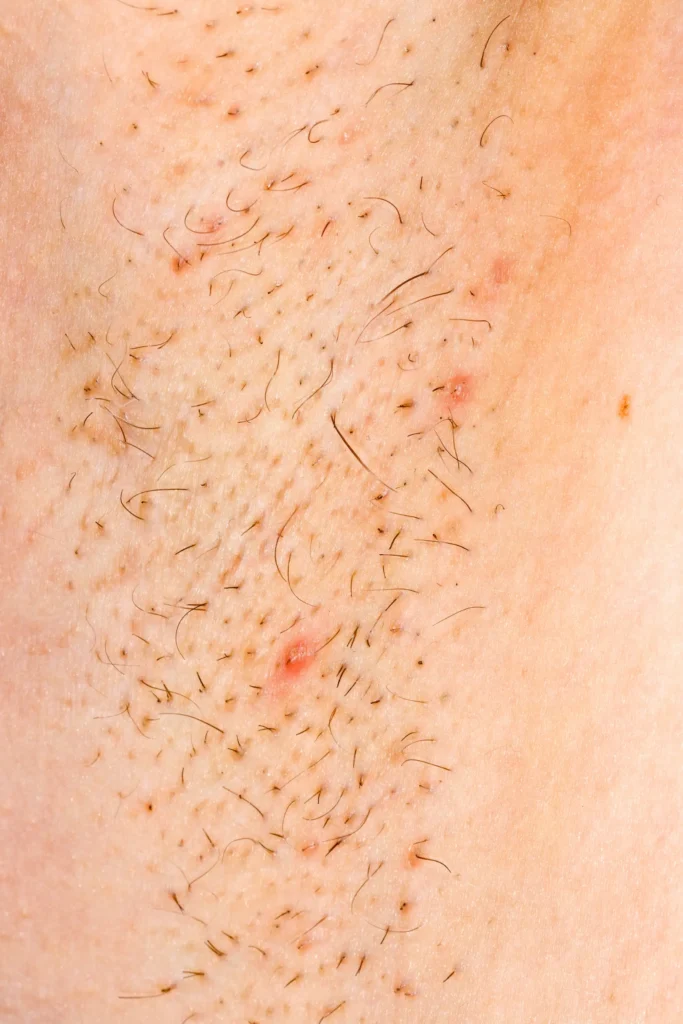
Repeated shaving can also come with irritation. Cuts, razor burn, and ingrown hairs can occur, particularly when hair is coarse or curly. That is why someone comparing laser hair removal vs. shaving may not actually be frustrated by the hair itself. They may be frustrated by what happens every time they remove it.


2. Waxing Buys More Time
Waxing removes the hair from the root rather than cutting it at the surface, so smoothness generally lasts longer than it does with shaving. That makes waxing appealing if you want a break from stubble without committing to a laser series.
You can treat areas such as the legs, bikini line, face, or underarms, then go several weeks before regrowth becomes noticeable enough to repeat the process. Still, waxing is temporary. The follicle remains capable of producing another hair, which means the cycle eventually starts again.
Waxing can also irritate the skin. Redness, tenderness, follicular irritation, or burns from overheated wax are possible. It is also not suitable in every circumstance. For example, waxing is discouraged on skin treated with certain medications or topical retinoids because those products can make skin more vulnerable to injury.
So, when people compare laser hair removal vs. waxing, the decision is often less about which removes hair better today and more about whether they want to keep repeating the same process indefinitely.
3. Laser Treatment Targets the Follicle
Laser hair removal changes the conversation because it is designed to reduce regrowth over time. Laser devices deliver light that is absorbed by pigment associated with the hair follicle. That light is converted to heat, which damages the follicle and reduces its ability to keep producing hair.
FDA-cleared devices in this category are commonly described in terms of permanent hair reduction, which is defined as a long-term, stable decrease in the number of regrowing hairs measured months after a completed treatment regimen.
That definition is important. Permanent hair reduction does not mean that every hair will disappear forever. Some hair can remain or eventually return. The difference is that, after an effective series, regrowth may be less dense, finer, or lighter than before.
That makes laser treatment fundamentally different from both shaving and waxing.
4. Laser Hair Removal Takes Multiple Sessions
If shaving wins on immediacy, laser wins on strategy. You do not typically complete one treatment and walk away permanently hair-free. Hair follicles are not all in the same growth stage at the same time, so treatment needs to be repeated over several appointments.
Most patients need a series. Clinical guidance notes that many patients require about two to six treatments, with sessions often spaced roughly four to six weeks apart depending on the person and treatment area.
That range is not a guarantee. Hair thickness, hair color, skin tone, treatment location, hormonal influences, laser type, and treatment settings can all affect how many sessions are appropriate. This is why laser hair removal is better understood as a process rather than a one-time procedure.
5. Results Build Gradually
One of the biggest expectation differences between laser and temporary hair removal is timing. When you shave or wax, the visual result is immediate. With laser, the progress accumulates. After an initial session, patients may see approximately 10% to 25% hair reduction, although results vary according to hair color, thickness, skin color, the treatment area, and the device used.
Subsequent sessions target additional follicles. After a completed series, some patients remain largely hair-free for months or even years. When hair regrows, it may be finer and less noticeable. Maintenance treatments may still be needed. This is a better expectation than assuming that laser removes every hair permanently after a few visits.
6. Hair Color Matters More With Laser
Shaving and waxing work regardless of whether your hair is black, brown, gray, blonde, or red. Laser hair removal is more selective. Because the treatment relies on pigment to absorb the light energy, dark hair generally responds more predictably than very light hair.
Blonde, gray, white, and red hairs may respond poorly because there may not be enough pigment in the hair for conventional laser systems to target effectively. That means laser is not automatically the best option for every patient.
Someone with dark, coarse hair may be a much stronger candidate than someone with very light, fine hair. If there is little pigment in the hair, shaving or waxing may remain more reliable. This is one reason consultation matters before purchasing a package based only on the size of the treatment area.
7. Skin Tone Matters Too
Laser technology has become more versatile across skin tones, but that does not mean device selection and operator experience stop mattering. Hair pigment and skin pigment can both absorb light. The goal is to heat the hair follicle while limiting unnecessary injury to surrounding skin.
That is why laser hair removal can be performed across a broader range of skin tones today, but treatment still needs to be adapted carefully to the patient’s skin color and hair characteristics.
This is relevant when discussing Aerolase hair removal. Aerolase Neo Elite uses a 1064 nm Nd:YAG wavelength, and the manufacturer lists hair removal and pseudofolliculitis barbae among its applications.
That manufacturer information explains the device’s intended role, but the broader claim that laser hair removal can be used across skin tones is better grounded in independent dermatology guidance rather than assumed from marketing alone.
8. Ingrown Hairs Can Change the Decision
For some patients, long-term hair reduction is attractive because of the bumps, not because of the hair. Repeated shaving can contribute to ingrown hairs, especially when coarse or curly hairs curve back into the skin. Waxing and plucking can also irritate follicles.
If less hair grows back after laser treatment, there are fewer hairs available to become trapped. That is why ingrown hair prevention often becomes part of the reason patients consider laser treatment.
Laser hair removal is also used for pseudofolliculitis barbae, or chronic razor bumps. Dermatology guidance recognizes laser hair removal as an option for patients whose repeated shaving contributes to razor bumps and ingrown hairs.
That does not mean every bump after shaving should automatically be treated with a laser. Acne, bacterial folliculitis, dermatitis, and other skin conditions can resemble ingrown hairs. Professional evaluation helps distinguish the problem before selecting treatment.

Choose the Routine You Can Live With
Shaving, waxing, and laser hair removal all have a place. The difference is how much ongoing maintenance each one asks from you.
If you are comfortable shaving regularly, there may be no reason to change. If waxing gives you the level of smoothness and spacing you want, that can be a practical solution too. But if unwanted hair, razor bumps, or repeated appointments have become an ongoing frustration, laser treatment offers a different strategy focused on lasting reduction.
At Fitzy Shades MedSpa, patients considering laser hair removal in Prosper, TX can discuss whether Aerolase is appropriate for their hair color, skin tone, treatment area, and goals. A personalized approach helps determine whether laser hair removal is actually a better fit than continuing to shave or wax.
Connect with us today to schedule your appointment!