



Choosing between two weight-management medications shouldn’t feel like picking the winner of a popularity contest. What worked well for a friend may not be appropriate for you, and the medication associated with greater average weight loss in a study isn’t automatically the right choice for every patient.
That’s an important principle of medical weight management. The National Institute of Diabetes and Digestive and Kidney Diseases (NIDDK) explains that choosing a prescription weight-management medication should take into account potential benefits, side effects, current health conditions, other medications, family medical history, and cost.
Semaglutide and tirzepatide can both be used for chronic weight management in appropriately selected patients, but they aren’t identical. So, rather than asking which medication is universally better, it helps to understand how they differ.
Read here for an evidence-based look at Semaglutide vs. Tirzepatide, including their mechanisms, research, side effects, and the individual factors that can shape treatment decisions.
What You Should Know About Both
Semaglutide and tirzepatide share several characteristics, but there are meaningful differences between them. Knowing where those similarities end can make your treatment conversation much more productive.
1. Semaglutide Targets GLP-1
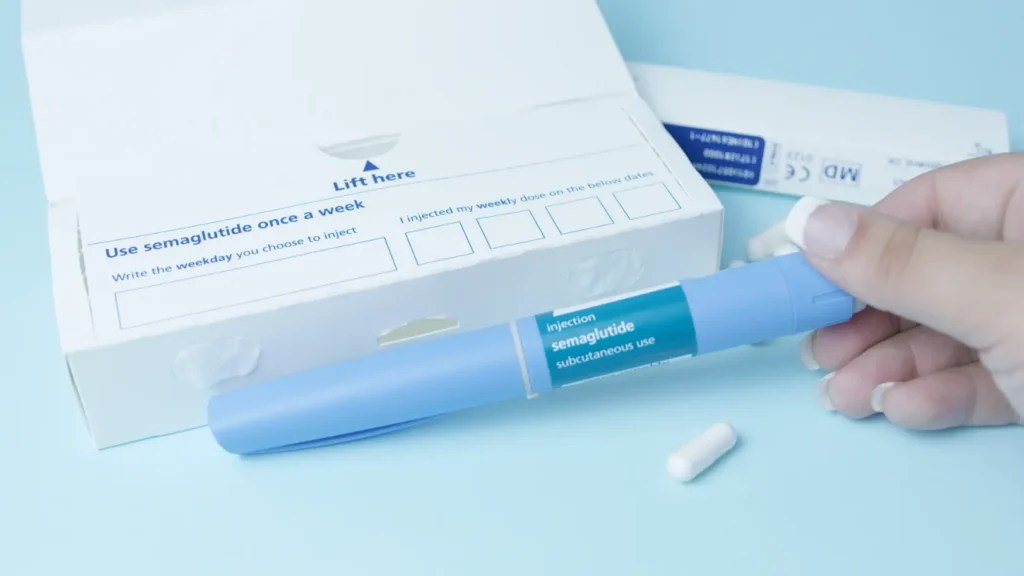
Semaglutide belongs to a medication class called glucagon-like peptide-1, or GLP-1, receptor agonists. For chronic weight management, Wegovy is the semaglutide product approved for long-term use. The NIDDK identifies Wegovy as a weekly semaglutide treatment that mimics GLP-1 and affects areas of the brain involved in appetite and food intake.
This helps explain why Semaglutide weight loss shouldn’t be described simply as boosting metabolism. Appetite and food intake are central to how the medication supports weight reduction.
Brand names matter here, too. The NIDDK distinguishes Wegovy from semaglutide sold under other names and dosages for type 2 diabetes. Having the same active ingredient doesn’t mean every semaglutide product has the same FDA-approved indication.

2. Tirzepatide Targets Two Pathways
Tirzepatide has a different pharmacologic profile. While semaglutide acts through GLP-1 receptors, the NIDDK describes tirzepatide as mimicking both glucose-dependent insulinotropic polypeptide, or GIP, and GLP-1, with effects on brain areas involved in appetite and food intake.
Zepbound is the tirzepatide product used for chronic weight management. The NIDDK lists Zepbound among FDA-approved medications for long-term treatment of overweight and obesity.
Patients researching Tirzepatide weight loss may also encounter Mounjaro. Tirzepatide is marketed under the different name Mounjaro for its FDA-approved type 2 diabetes indication. This dual GIP/GLP-1 activity is one of the central differences between semaglutide and tirzepatide.
3. Both Can Be Weekly Injections
Semaglutide and tirzepatide have something very practical in common: both have once-weekly injectable formulations used for weight management.
The NIDDK lists both Wegovy and Zepbound as weekly injectable weight-management medications. However, being weekly weight loss injections doesn’t make the medications interchangeable.
Treatment is also more involved than simply choosing a drug and beginning at its highest dose. Each medication uses dose escalation, allowing treatment to progress gradually while response and tolerability are assessed.
That distinction matters because patients can respond differently as the dose changes. A medication that looks appropriate on paper still has to be tolerable for the person actually taking it.
4. Head-to-Head Evidence Gives Us a Comparison
For years, much of the discussion about Semaglutide vs. Tirzepatide relied on comparing separate clinical trials. We now have direct randomized evidence.
The SURMOUNT-5 trial published in the New England Journal of Medicine directly compared tirzepatide and semaglutide in 751 adults with obesity who did not have type 2 diabetes. Participants received the maximum tolerated dose of tirzepatide, either 10 or 15 mg, or semaglutide, either 1.7 or 2.4 mg, once weekly for 72 weeks.
At week 72, the average body-weight change was -20.2% with tirzepatide and -13.7% with semaglutide. Waist circumference also decreased more on average in the tirzepatide group. Those numbers deserve context.
The trial studied adults with obesity without type 2 diabetes, used specific medication doses, and followed participants within a structured clinical-trial setting. The results describe average outcomes for that population, not what every individual patient will experience.
So while the study found greater average weight reduction with tirzepatide at the doses tested, it doesn’t establish a universal answer for every patient choosing a weight loss medication.
5. Individual Results Can Differ
Clinical-trial averages are valuable, but an average doesn’t tell you exactly what will happen to you. The NIDDK notes that results from prescription weight-management medications vary according to both the medication and the individual. Some patients lose considerably more weight than others, while some may not achieve enough benefit to justify continuing a particular treatment.
This is why treatment decisions shouldn’t be based solely on the largest percentage printed in a clinical trial. Response is only one consideration. Tolerability, other medical conditions, medications, family history, treatment access, and personal circumstances can all change the decision.
That’s also why comparing Semaglutide weight loss with Tirzepatide weight loss should be the beginning of a medical conversation, not the end of one.
6. Medical History Matters
Your health history can be just as important as a medication’s average effectiveness. The NIDDK specifically recommends considering current health conditions, other medications, family medical history, potential side effects, likely benefits, and cost when choosing a prescription weight-management medication.
Both medications also have important contraindications. Semaglutide and tirzepatide shouldn’t be used by patients with a personal or family history of medullary thyroid carcinoma, or MTC, or Multiple Endocrine Neoplasia syndrome type 2, or MEN 2.
Other medications matter as well. Patients must tell their healthcare professional about prescription drugs, over-the-counter medicines, vitamins, supplements, and herbal products before using weight-management medication because harmful interactions can occur. This is why medical screening shouldn’t be treated as a formality.
7. Pregnancy Changes the Conversation
Pregnancy and pregnancy plans are particularly important when considering prescription weight management. Weight-management medications shouldn’t be taken during pregnancy or when planning pregnancy because they may harm the fetus.
That makes pregnancy planning something to discuss before beginning either medication, not after treatment has already started. Patients who could become pregnant should also discuss contraception and medication-specific instructions with the prescribing healthcare professional.
Treatment decisions can change when family-planning goals change. This is another example of why GLP-1 weight loss shouldn’t be approached as a standard package that’s identical for every patient.
8. Gastrointestinal Effects Are Common
Digestive side effects are among the most familiar concerns associated with these medications. The strongest direct comparison comes from SURMOUNT-5. The trial found that gastrointestinal events were the most common adverse events with both tirzepatide and semaglutide, with most described as mild to moderate and occurring mainly during dose escalation.
That finding helps explain why dose progression and follow-up matter. Experiencing a side effect doesn’t automatically mean treatment must stop, but significant or persistent symptoms shouldn’t simply be dismissed. A healthcare professional can determine whether the dose, treatment plan, or medication itself needs reconsideration.
A responsible GLP-1 clinic should therefore provide more than access to injections. Patients need a way to discuss tolerance and new symptoms throughout treatment.


9. Medication Isn’t for Everyone
The fact that semaglutide and tirzepatide can produce substantial weight reduction doesn’t mean every person who wants to lose weight should use them. Prescription weight-management medications aren’t appropriate for everyone with a high BMI.
For adults, healthcare professionals may consider medication when BMI is 30 or greater, or when BMI is at least 27 and a patient has weight-related health problems such as hypertension or type 2 diabetes.
Even meeting those general criteria doesn’t mean a particular medication is automatically appropriate. The patient’s health history, risks, treatment goals, and other options still need to be considered. Medication eligibility and medication selection are two separate questions.
10. Lifestyle Support Still Belongs in the Plan
The effectiveness of these medications doesn’t make healthy eating and physical activity obsolete. Weight-management medications don’t replace physical activity or healthy eating habits and work best when combined with a lifestyle program.
That doesn’t mean following an extreme diet or suddenly adopting an unrealistic exercise routine. A useful plan should help patients develop eating and activity habits they can maintain. Nutrition also becomes particularly important when appetite changes significantly, because eating less doesn’t automatically mean eating well.
This broader approach is what separates medical weight management from simply receiving a weekly injection.
11. Treatment May Be Long Term
Another common misconception is that medication is something everyone takes briefly, loses weight with, and then permanently leaves behind. The length of treatment depends on whether a medication is helping a patient lose and maintain weight and whether serious side effects occur.
For patients benefiting from treatment without serious adverse effects, a healthcare professional may recommend continued therapy. Some weight regain is likely after stopping weight-management medication.
That makes long-term planning important from the beginning. Patients should understand what happens after initial weight reduction, how progress will be monitored, and what lifestyle strategies will support ongoing management.
12. Follow-Up Helps Guide the Decision
Starting medication isn’t the end of medical decision-making. Treatment response can reveal information that wasn’t available during the first consultation. Side effects may appear. Weight change may be greater or smaller than expected. Other medications or health circumstances may change.
Patients taking prescription weight-management medications should follow their healthcare professional’s instructions and discuss benefits, risks, side effects, and other medications throughout treatment. Follow-up also provides an opportunity to decide whether continuing the same medication still makes sense.
This is one reason searching for Semaglutide or Tirzepatide should involve more than finding where a medication is available. The quality of the medical evaluation and follow-up matters too.
Put Your Health First
Semaglutide vs. Tirzepatide is an important comparison, but medication choice is only one piece of medical weight management. Your medical history, current medications, potential risks, response to treatment, lifestyle, and long-term goals all deserve a place in the decision.
At Fitzy Shades MedSpa in Prosper, TX, patients considering Semaglutide, Tirzepatide, or other medically guided weight-management options can begin with a consultation. That conversation can help determine whether medication is appropriate and how it may fit into a personalized approach to weight management.
Connect with us to schedule your appointment!