
Great skin doesn’t come from collecting treatments. It comes from understanding what your skin is asking for. Acne, dullness, pigmentation, rough texture, and laxity may all affect how your complexion looks, but each concern can call for a very different approach.
That’s why choosing a skincare treatment should start with the concern, not the latest treatment you’ve seen online. A facial may be useful for surface care, while microneedling, chemical peels, or RF microneedling may be more appropriate for other goals.
Continue reading to see how common skin concerns can point you toward different treatment categories and why a personalized consultation matters.
Match Treatment to Concern
Asking, “What’s the best facial for my skin?” is understandable, but there’s a better place to begin. First identify whether you’re primarily dealing with breakouts, dullness, pigmentation, texture, scarring, or laxity.
1. Acne: Start With the Breakouts
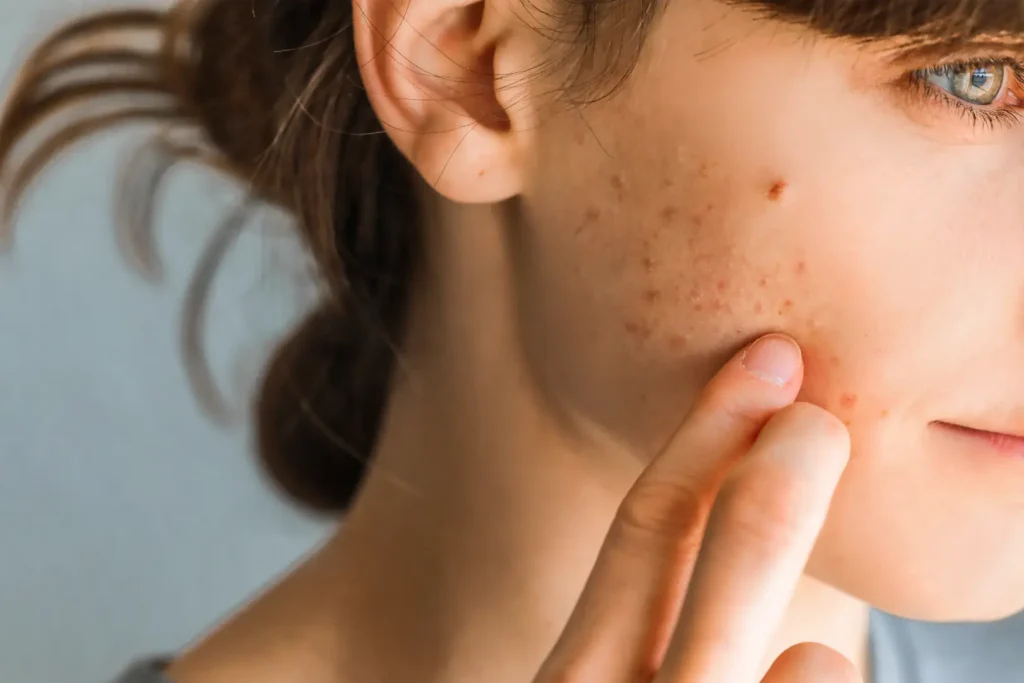
Acne isn’t simply a matter of having dirty or congested skin. It’s a skin condition that can include blackheads, whiteheads, inflammatory pimples, nodules, and cysts, and treatment varies depending on the type and severity.
The American Academy of Dermatology’s current acne guidelines recommend established treatments including topical benzoyl peroxide, retinoids, antibiotics, salicylic acid, azelaic acid, and selected systemic medications. Importantly, the AAD found that available evidence was insufficient to make formal recommendations for procedures such as chemical peels, lasers, light-based devices, and microneedling as routine acne treatments.
That doesn’t mean procedures never have a role. The AAD’s guidance on laser and light therapy for acne explains that these treatments can reduce acne for some patients, but results vary and laser or light therapy rarely clears acne by itself. Patients may still need another acne treatment as part of the overall plan.
This distinction matters when considering an acne facial or a technology such as Aerolase at Fitzy Shades MedSpa. A facial for acne can be considered supportive skin care when professionally selected, while an energy-based procedure should be evaluated according to the patient’s acne type and treatment plan.
Neither should be positioned as a universal replacement for evidence-based acne therapy. Persistent, painful, cystic, or scarring acne may require medical evaluation rather than simply moving to a stronger facial.
2. Dullness: Think Surface Refresh
Sometimes the problem isn’t deep scarring or significant pigmentation. Skin may simply feel rough, congested, dry, or less radiant than usual.
HydraFacial is designed around surface-level cleansing, exfoliation, extraction, and hydration. According to Hydrafacial’s description of its treatment technology, its Vortex-Fusion system is used to cleanse and exfoliate, remove debris from pores, and deliver hydrating topical solutions.
That places HydraFacial in a very different category from procedures such as SkinPen or Morpheus8. If dullness and congestion are the main concerns, a medical spa facial focused on cleansing and hydration may make more sense than immediately choosing a treatment that intentionally creates controlled injury within the skin.
It’s also important not to oversell what a facial can accomplish. HydraFacial shouldn’t be presented as equivalent to a treatment designed for structural acne scars or significant laxity. The treatment should fit the depth of the concern.
3. Pigmentation: Find Out What It Is
Dark spots can describe several different skin concerns. Sun-related spots, freckles, post-inflammatory hyperpigmentation, and melasma can look similar to an untrained eye but don’t necessarily require the same treatment.
Chemical peels are one established option for selected pigmentation concerns. The American Academy of Dermatology lists uneven skin tone, age spots, freckles, melasma, dullness, and sun-damaged skin among concerns dermatologists may treat with chemical peels.
That makes a peel one possibility when someone is looking for a facial for hyperpigmentation, but peel depth and formulation matter. Chemical peels range in intensity, and some require meaningful recovery.
Lumecca may also be considered at Fitzy Shades MedSpa for appropriate pigmentation concerns. Because it uses intense pulsed light rather than chemical exfoliation, it belongs to a different treatment category and shouldn’t be treated as interchangeable with a peel. The type of pigmentation needs to come first.
Melasma is a good example. The AAD recommends individualized treatment for melasma based on factors including skin tone, pigment depth, and possible triggers. Chemical peels may sometimes be incorporated, but sun protection and other therapies can also be central to treatment.
There is another important reason to identify pigment before treating it. The AAD warns that something that looks like an ordinary age spot can sometimes be skin cancer. A suspicious, new, or changing lesion therefore deserves medical evaluation rather than immediate cosmetic treatment.
4. Texture and Scars: Think SkinPen
Texture is different from pigmentation. If the skin is physically depressed or irregular from acne scarring, simply brightening or exfoliating the surface may not address the underlying concern. That’s where SkinPen microneedling can enter the conversation.
The FDA explains that microneedling devices create numerous small punctures in the skin. Certain FDA-authorized microneedling devices are legally marketed to improve the appearance of facial acne scars and facial wrinkles in adults aged 22 and older. This provides a stronger evidence-based rationale for considering microneedling as a skin texture treatment when acne scarring is the concern.
The AAD also lists microneedling among treatments for depressed acne scars. By creating controlled skin injury, microneedling stimulates a healing response that can make certain depressed scars less noticeable. Improvement doesn’t mean complete removal.
The FDA notes that results can vary and that more than one microneedling procedure may be necessary. Potential effects include redness, bleeding, bruising, tightness, itching, and peeling. Less common risks include pigment changes, infection, and cold sore flare-ups.
This is why SkinPen and HydraFacial shouldn’t be presented as two versions of the same treatment. One focuses primarily on surface care, while microneedling intentionally penetrates the skin to create a controlled response.
5. Aging and Laxity: Consider Morpheus8
Skin aging isn’t only about what happens at the surface. Changes in wrinkles, texture, and laxity may require a different approach from hydration or exfoliation alone. Morpheus8 belongs to the RF microneedling category.
According to the FDA’s description of RF microneedling technology, these devices use small needle-like electrodes that enter the skin and deliver radiofrequency energy at specific depths, producing localized heat within tissue.
That means someone searching for a facial for aging skin should understand an important distinction: Morpheus8 isn’t a traditional facial. RF microneedling is a medical procedure. The safety conversation matters here too.
In October 2025, the FDA issued a safety communication about RF microneedling after receiving reports of serious complications with certain uses. Reported complications included burns, scarring, fat loss, disfigurement, and nerve damage. The FDA recommends that patients considering RF microneedling seek a licensed healthcare provider with training and experience using these devices.
This doesn’t mean every patient will experience a complication. It does mean RF microneedling deserves the same thoughtful discussion of candidacy, expected benefits, limitations, and risks as other medical aesthetic procedures.
For someone primarily bothered by laxity or aging-related texture, consultation can help determine whether Morpheus8 is appropriate or whether another approach better matches the concern.

More Than One Concern?
Skin rarely falls perfectly into a single category. You might have active acne alongside old dark marks, or pigmentation alongside textural changes. That’s where professional skincare becomes less about choosing a treatment from a menu and more about creating a logical sequence.
For example, the AAD explains that dermatologists may use multiple approaches when treating acne scars. Available treatments for depressed scars can include microneedling, chemical peels, radiofrequency treatments, laser therapy, fillers, and other procedures depending on the scar.
That doesn’t mean everyone needs several treatments. Instead, each treatment should have a purpose. One may address pigmentation, while another addresses depressed texture. If active acne is present, controlling new breakouts may become a priority before focusing heavily on old scars.
A customized skincare treatment should therefore be built around what each procedure is intended to accomplish rather than how many procedures can be combined.
Think About Downtime
Your skin concern isn’t the only thing that determines which treatment makes sense. Your tolerance for recovery matters too. Chemical peels demonstrate this clearly. The AAD explains that chemical peels vary from mild to strong, with the appropriate strength depending on the patient’s needs. Multiple sessions may be required with milder or medium-depth approaches.
Microneedling has its own recovery profile. The FDA lists bleeding, bruising, redness, tightness, itching, and peeling among possible effects of microneedling, with some less-common complications also possible.
RF microneedling has a different risk profile and, as the FDA emphasizes, should be regarded as a medical procedure. Two patients with similar concerns may therefore make different choices based on their health history, skin characteristics, goals, and willingness to accommodate recovery. Your calendar deserves a place in the treatment conversation.
Give Your Skin the Right Kind of Care
Finding the right skincare treatment isn’t about choosing the most advanced procedure on the menu. Acne, dullness, pigmentation, scarring, texture, and laxity have different characteristics, so the treatment should be selected around the actual concern.
At Fitzy Shades MedSpa, patients looking for a skin treatment in Prosper, TX can explore options such as acne facials, HydraFacial, chemical peels, SkinPen, and Morpheus8. A personalized consultation can help narrow those choices into a plan that fits your skin, goals, and comfort with recovery.
Contact us today to schedule your appointment!