
Fine lines and wrinkles don’t all develop for the same reason. Some become more noticeable when you smile, frown, squint, or lift your brows. Others stay visible when your face is relaxed because aging and sun exposure have changed the skin itself.
The American Academy of Dermatology (AAD) identifies several different treatment categories for wrinkles, including prescription retinoids, botulinum toxin, fillers, chemical peels, microdermabrasion, and laser resurfacing.
That is why choosing a wrinkle treatment shouldn’t begin with the name of a product. It should begin with the type of line you’re seeing and the reason it developed. At Fitzy Shades MedSpa, options can include wrinkle relaxers, dermal fillers, laser treatments, microneedling, and professional skincare.
Scroll deeper to see where each may fit and why the best plan is often more individualized than simply asking for the most popular injectable.
Match the Treatment to the Wrinkle
A helpful starting point is to decide whether your concern is mostly related to muscle movement, loss of facial volume, or changes in skin quality. Those categories can overlap, but they don’t respond to treatment in exactly the same way.
1. Wrinkle Relaxers for Movement Lines
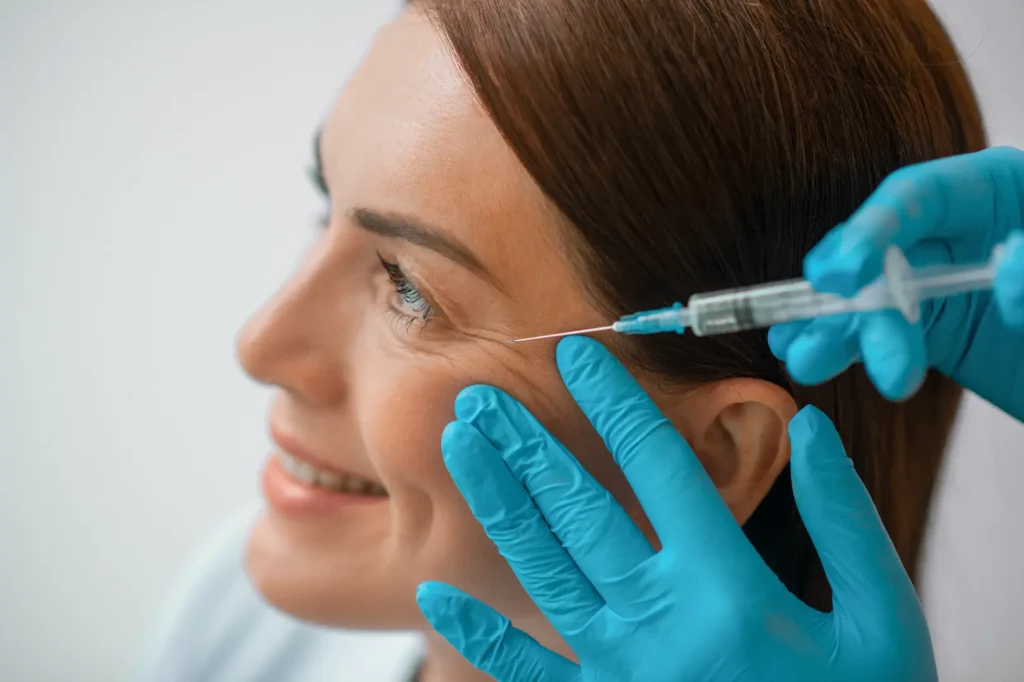
Expression lines are strongly influenced by facial muscle activity. For example, the current BOTOX Cosmetic prescribing information links glabellar lines to corrugator and procerus muscle activity, lateral canthal lines to orbicularis oculi activity, and forehead lines to frontalis muscle activity.
A neuromodulator, often called a wrinkle relaxer, works differently from filler or resurfacing because it acts at the neuromuscular junction. The FDA explains that botulinum toxin products reduce the appearance of wrinkles by keeping targeted muscles from tightening as strongly.
That makes this treatment category especially relevant for lines connected to repeated facial expression.
- Botox. For patients researching Botox for wrinkles, FDA-approved BOTOX Cosmetic has specific cosmetic indications. It is currently indicated for the temporary improvement of moderate-to-severe glabellar lines, lateral canthal lines, and forehead lines in adults when those lines are associated with activity of the corresponding facial muscles.
That means Botox is directly relevant to common searches for a forehead wrinkles treatment or crow’s feet treatment when muscle movement is driving the concern.
The effect is temporary rather than permanent. Current BOTOX Cosmetic labeling notes that the effect on glabellar lines is approximately three to four months, although individual response varies.
- Dysport. Another botulinum toxin type A product, but its FDA-approved cosmetic indication isn’t identical to Botox Cosmetic’s. Current prescribing information supports Dysport for temporary improvement of moderate-to-severe glabellar lines, or frown lines between the eyebrows. Its clinical studies showed improvement in glabellar-line severity, with the label reporting that treatment effects may last up to four months.
So, while Dysport belongs in the same general neuromodulator family, it shouldn’t be described as having every cosmetic indication that Botox Cosmetic has.
- Jeuveau. Also FDA-approved for a specific cosmetic purpose. The current Jeuveau prescribing information states that it is indicated for temporary improvement of moderate-to-severe glabellar lines associated with corrugator and/or procerus muscle activity in adults.
Its labeling also makes an important technical point: Jeuveau’s potency units are specific to the product and cannot be directly compared with or converted into units of other botulinum toxin products.
That is why units across Botox, Dysport, Jeuveau, and Xeomin shouldn’t be treated as though they are interchangeable measurements.
- Xeomin. Its current FDA labeling is broader than it once was. It is now indicated for temporary improvement of moderate-to-severe glabellar lines, horizontal forehead lines, and lateral canthal lines in adults. This makes Xeomin another option that may be considered for certain upper facial expression lines.
The larger point is that the product, treatment area, muscle pattern, and dose all matter. The medications may belong to the same drug family, but their labeled uses and dosing units are not identical.
2. Fillers for Volume-Related Changes
Wrinkle relaxers reduce activity in selected muscles. Dermal fillers have a different job. These injectable implants are used to add volume or fullness to areas of the face and to correct certain contour deficiencies, wrinkles, and folds.
Many FDA-approved fillers contain hyaluronic acid, a naturally occurring polysaccharide that can attract water when formulated as a gel. This makes fillers more relevant when aging has changed facial fullness or contour rather than when a line is primarily caused by repeated muscle contraction.
That doesn’t mean every wrinkle should be filled. In fact, the FDA specifically notes that filler use in areas such as the forehead, glabella, nose, and around the eyes is not FDA-approved. Fillers also carry real medical risks.
Remember that the unintentional injection into a blood vessel can lead to serious complications, including tissue death, vision problems, blindness, or stroke. For that reason, filler injections should be treated as medical procedures rather than casual beauty services.
3. Laser Treatment for Skin Quality
Some patients don’t have one deep fold or a single expression line. Instead, they notice fine lines alongside sun damage, discoloration, or an increasingly uneven surface.
Laser resurfacing belongs to a different treatment category because it works on the skin rather than on muscle movement or volume. The AAD includes laser resurfacing among treatments used to improve wrinkles and other signs of accumulated sun damage.
That makes laser treatment potentially relevant when an anti-aging treatment needs to address several skin-quality concerns together. However, laser is not one standardized procedure. Different devices use different wavelengths, settings, treatment depths, and mechanisms. Candidacy can also be influenced by skin tone, the type of concern, medical history, and the specific laser being used.
The FDA advises patients considering aesthetic devices to discuss expected benefits, risks, candidacy, and the provider’s training and experience before treatment.
Fitzy Shades MedSpa offers Aerolase among its energy-based treatment options. The provided practice material lists wrinkles and aging skin among concerns treated at the clinic, but strong claims about the degree of wrinkle improvement should be based on the exact device, protocol, and patient’s clinical assessment rather than assumed from the treatment category alone.
That distinction keeps expectations realistic.
4. Microneedling for Fine Lines and Texture
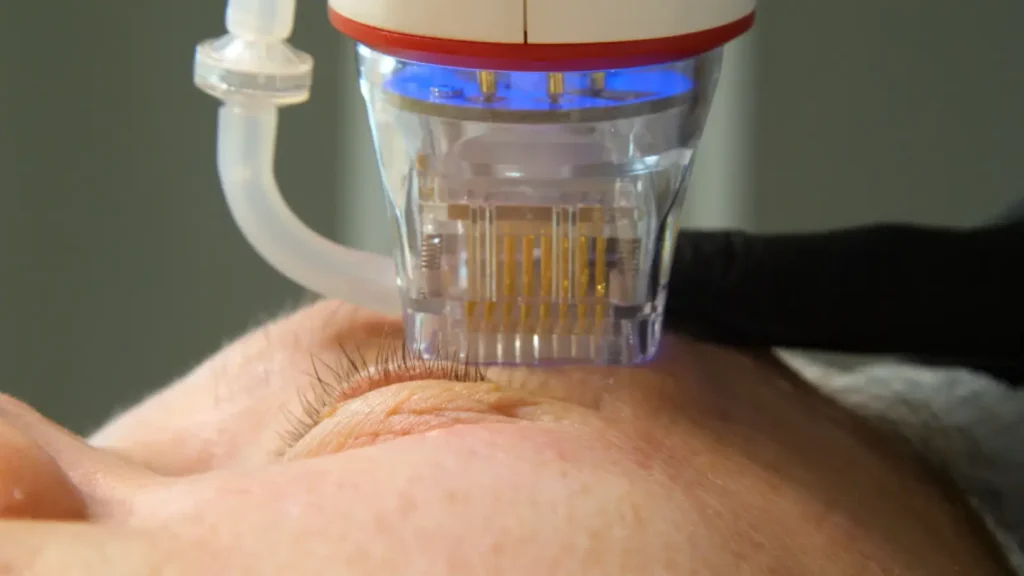
Microneedling can make sense when fine lines appear alongside uneven texture. The FDA explains that powered microneedling devices create controlled punctures in the skin and has legally authorized specific devices for improving the appearance of facial wrinkles in patients aged 22 and older.
That authorization applies to specific devices and indications, not every tool marketed as microneedling. The AAD also describes microneedling as a procedure that can stimulate collagen production and make certain fine lines and wrinkles less noticeable. This gives microneedling a very different role from Botox.
Botulinum toxin targets selected muscle activity. Microneedling creates controlled skin injury with the goal of triggering tissue remodeling. Someone bothered by textural fine lines may therefore have a different treatment plan from someone whose main concern is deepening forehead creases during expression.
Microneedling also has limitations and risks. The common effects include redness, dryness, roughness, tightness, itching, peeling, discomfort, bruising, bleeding, and crusting. Less common risks include pigment changes, cold sore reactivation, infection, and other reactions.
5. Skincare for Mild Lines and Prevention
A professional procedure isn’t necessarily the first answer for every fine line. For mild wrinkles, topical retinoids have substantial dermatologic use. The AAD states that retinoids may be appropriate for people with mild fine lines and wrinkles, along with certain pigmentation and textural concerns.
Retinoids can also irritate the skin, especially when introduced too quickly. The AAD advises starting gradually and notes that people with significant redness, inflammation, allergies, or dryness may not be good candidates without professional guidance.
Moisturizers have a more limited but still useful role. The FDA distinguishes between a product that makes wrinkles temporarily less noticeable through moisturization and a drug or medical device intended to change the structure or function of the skin.
That is worth remembering when evaluating anti-aging skincare claims. And no wrinkle conversation is complete without sun protection. Repeated ultraviolet exposure contributes to cumulative skin damage and visible signs of aging, including wrinkles.
Protecting the skin doesn’t erase existing lines, but it helps reduce continued UV-related damage.
Choose the Treatment That Matches the Problem
The best answer to how to reduce wrinkles isn’t one product or one device. It depends on why the wrinkles are present. Botox, Dysport, Jeuveau, and Xeomin can play roles in treating selected expression-related lines according to their individual approved indications. Dermal fillers can restore volume in FDA-approved treatment areas.
Laser resurfacing and microneedling may address selected skin-quality and textural concerns, while evidence-based skincare can support mild fine lines and ongoing skin health.
At Fitzy Shades MedSpa, patients looking for wrinkle treatment in Prosper, TX, can explore which of these options actually matches their concerns. A personalized consultation can help separate muscle-driven lines from changes in volume and skin quality so that wrinkle treatment becomes a thoughtful plan rather than a one-treatment-fits-all decision.
Call us today to book your consultation!