
Wrinkles can start as tiny expression lines that only appear when you smile or frown. Over time, some become easier to see even when your face is relaxed. If you already know you’re interested in injections, the confusing part often comes next: Botox, Dysport, Jeuveau, Xeomin, neuromodulators, wrinkle relaxers. Are these all the same thing?
Not exactly. Botox is one specific brand within the broader category of botulinum toxin injections used to temporarily reduce certain expression lines. The same general category also includes Dysport, Jeuveau, and Xeomin. These medications work by reducing nerve signaling to targeted muscles, which temporarily decreases the muscle activity that contributes to certain wrinkles. This mechanism and the FDA-approved cosmetic uses of Botox, Dysport, Xeomin, and Jeuveau are described in their official prescribing information and FDA consumer guidance.
The better question, then, isn’t simply whether Botox or another wrinkle relaxer is best. It is which product, treatment area, and dosing approach make sense for your facial movement, goals, and medical history. Keep reading to see where the major brands differ and what actually matters during consultation.
Botox vs. Wrinkle Relaxers
Botox belongs to the wrinkle-relaxer family, but each product is its own prescription medication. Their approved treatment areas, dosing units, formulations, and labeling aren’t interchangeable.
1. Botox Is One Brand, Not the Whole Category
The word Botox is often used casually to describe cosmetic wrinkle injections, but medically it refers to a specific product containing onabotulinumtoxinA.
Botox Cosmetic is classified as an acetylcholine-release inhibitor and neuromuscular blocking agent. It temporarily reduces muscle activity by blocking acetylcholine release at the neuromuscular junction, which is why it can soften wrinkles that become prominent with repeated facial movement.
That mechanism helps explain the difference between Botox and other injectable treatments such as dermal fillers. A wrinkle relaxer doesn’t physically fill a crease. Instead, it reduces activity in selected muscles that contribute to expression lines.
This is also why the term neuromodulators is commonly used for this category. Botox, Dysport, Jeuveau, and Xeomin all act on neuromuscular signaling, although they remain distinct prescription products.
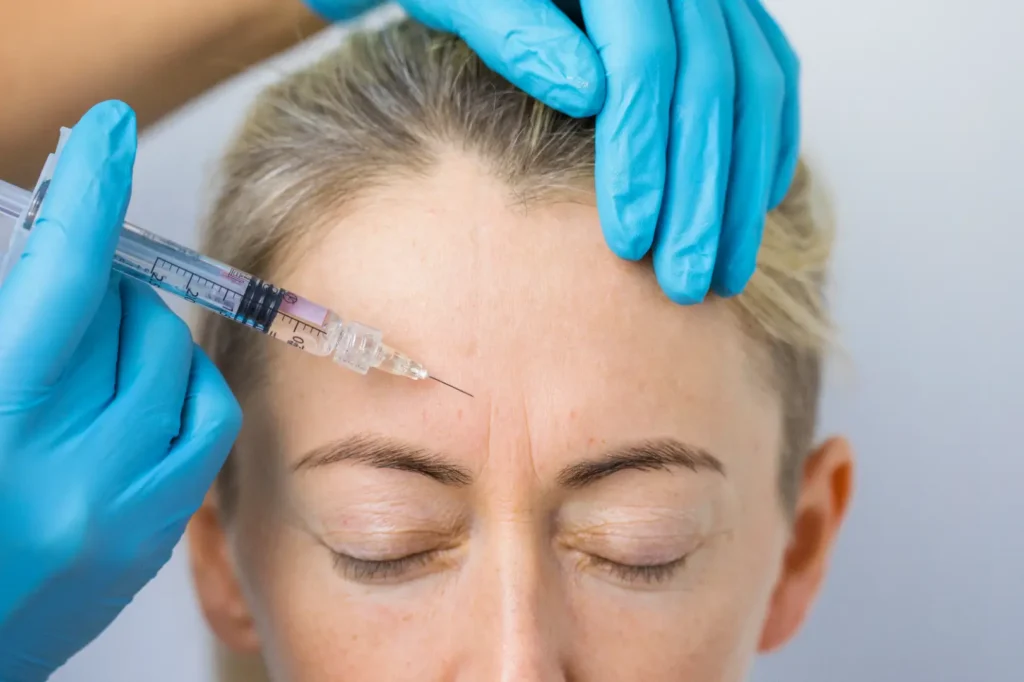
2. Botox Has Several FDA-Approved Cosmetic Areas
Botox Cosmetic currently has FDA-approved indications for several common expression-related concerns. Its official labeling includes the temporary improvement of moderate-to-severe glabellar lines, lateral canthal lines, forehead lines, and platysma bands in adults.
Translated into everyday language, those treatment areas include:
- Frown lines between the eyebrows
- Crow’s feet beside the eyes
- Horizontal forehead lines
- Visible neck bands
This makes forehead Botox and crow’s feet Botox well-grounded terms when those concerns match the approved indications.
But Botox isn’t an all-purpose wrinkle eraser. If a crease is being driven mainly by volume loss, sun damage, or changes in skin texture, reducing muscle activity may not address the entire concern. That distinction is one reason consultation matters before treatment.
3. Dysport Focuses on Glabellar Lines in Its Cosmetic Label
The Botox vs. Dysport comparison is popular because both products are botulinum toxin type A injections, but their current FDA-approved cosmetic indications aren’t identical.
Dysport contains abobotulinumtoxinA and is approved for the temporary improvement of moderate-to-severe glabellar lines associated with procerus and corrugator muscle activity in adults younger than 65.
That means its labeled cosmetic indication specifically focuses on frown lines between the eyebrows. The product also has its own dosing system. Dysport potency units cannot be directly compared with or converted into the units of other botulinum toxin products.
This is particularly important for consumers because unit counts can look dramatically different across brands. A larger Dysport unit number doesn’t automatically mean the patient is receiving a stronger or larger treatment than someone receiving Botox.
4. Jeuveau Is Another Glabellar-Line Option
Botox vs. Jeuveau is another common search because Jeuveau is also a botulinum toxin type A prescription medication. Jeuveau contains prabotulinumtoxinA-xvfs and is FDA-approved for temporary improvement of moderate-to-severe glabellar lines associated with corrugator and/or procerus muscle activity in adults.
Like Dysport, its labeled cosmetic indication centers on the frown lines between the brows. Jeuveau’s dosing units also belong only to Jeuveau. Its prescribing information states that its potency units aren’t interchangeable with and cannot be converted into units of other botulinum toxin preparations.
So, again, comparing injections purely by unit number can be misleading. For patients, the more useful conversation is why a provider recommends one product for their anatomy and goals rather than how many units one brand uses compared with another.
5. Xeomin Has Expanded Upper-Face Indications
The Botox vs. Xeomin conversation changed meaningfully with Xeomin’s current labeling. Xeomin contains incobotulinumtoxinA and is now approved for the temporary improvement of upper facial lines, including glabellar lines, horizontal forehead lines, and lateral canthal lines, whether treated individually or at the same time.
Those lateral canthal lines are commonly called crow’s feet. That puts Xeomin’s current cosmetic indications closer to Botox Cosmetic’s upper-face indications than older comparisons may suggest. However, the medications still aren’t the same product and shouldn’t be treated as interchangeable.
This is a good example of why current prescribing information matters. Cosmetic indications can change over time as additional uses are studied and approved.
6. The Brands Aren’t Meant to Be Compared Unit for Unit
One of the easiest mistakes to make when researching wrinkle injections is looking at unit pricing and assuming every unit means the same thing. It doesn’t. Botox Cosmetic’s prescribing information states that its potency units are specific to that product and cannot be compared with or converted into the units of other botulinum toxin products.
The same non-interchangeability warning appears in the prescribing information for Dysport and Jeuveau. That means 20 units of one brand shouldn’t be interpreted as equivalent to 20 units of another. Dose selection has to follow the characteristics and prescribing guidance of the particular product being used.
From a consumer standpoint, this makes price-per-unit comparisons less informative than they may initially appear.
7. Treatment Areas Depend on the Product
All four medications belong to the botulinum toxin family, but their approved cosmetic uses differ.
Botox Cosmetic currently includes glabellar lines, forehead lines, crow’s feet, and platysma bands. Dysport’s cosmetic labeling covers glabellar lines, while Jeuveau is approved for glabellar lines. Xeomin currently includes glabellar, forehead, and lateral canthal lines.
Providers may sometimes use an FDA-approved medication for an off-label purpose based on clinical judgment, but that shouldn’t be confused with an FDA-approved indication. This distinction becomes especially relevant when patients ask about treating areas such as bunny lines, lip lines, chin dimpling, or other locations they may have seen discussed online.
The appropriate question is not merely whether a product can physically be injected in an area. It is whether the proposed use is approved or off-label, why that treatment is being recommended, and what risks apply.
8. Facial Anatomy Influences the Plan
Neuromodulator treatment requires more than identifying a wrinkle. Botox Cosmetic’s prescribing information specifically ties glabellar lines to corrugator and procerus activity, lateral canthal lines to orbicularis oculi activity, and forehead lines to frontalis activity.
That relationship between muscle and wrinkle is why providers evaluate facial movement during consultation. How strongly you frown, how your brows move when you raise them, the position of your eyelids, facial symmetry, and previous procedures can all influence the treatment conversation.
Dysport’s prescribing information, for example, specifically advises caution in patients with facial asymmetry, surgical alterations to facial anatomy, ptosis, deep dermal scarring, inflammation at the proposed injection site, and certain other anatomical considerations.
This is why consultation can’t simply be reduced to “How many units do I need?” A treatment plan needs to make sense for the face receiving the injections.

9. Medical History Matters Too
Facial anatomy is only one part of the evaluation. Botulinum toxin medications have contraindications and precautions that need to be reviewed before treatment. For example, Botox Cosmetic should not be administered to patients with hypersensitivity to a botulinum toxin preparation or when infection is present at the proposed injection site.
Neuromuscular conditions deserve particular attention as well. Dysport’s prescribing information states that patients with neuromuscular junction disorders and certain peripheral motor neuropathies may have an increased risk of clinically significant effects, including severe swallowing and respiratory complications.
Current medications also matter because drugs that interfere with neuromuscular transmission or muscle function can interact with botulinum toxin effects. That is why patients should provide an accurate medical and medication history even when the treatment goal is purely cosmetic.
Know the Category Before Choosing the Brand
Botox is a wrinkle relaxer, but wrinkle relaxers include more than Botox. Dysport, Jeuveau, and Xeomin are separate botulinum toxin type A medications, each with its own FDA-approved cosmetic indications, dosing units, prescribing information, and safety considerations.
At Fitzy Shades MedSpa, patients considering Botox in Prosper, TX, or another neuromodulator can begin by discussing their facial movement, treatment areas, medical history, and desired outcome. A thoughtful consultation helps determine which option may be appropriate without assuming that the most familiar brand is automatically the right one.
Call us today to schedule your consultation!