
A smooth shave should not have to come with three days of itching, tenderness, and bumps afterward. Yet for some patients, that pattern repeats almost every time they remove hair. The problem may be more than simple irritation.
Pseudofolliculitis barbae, commonly called razor bumps, happens when shaved or plucked hairs curve back into the skin and trigger inflammation. It most often affects the beard and neck, but it can also appear anywhere hair is routinely removed. Pseudofolliculitis is especially associated with coarse or tightly curled hair and with shaving or plucking practices that allow the cut hair to re-enter the skin.
The good news is that recurring bumps are not something you simply have to accept. Better shaving habits can reduce the cycle, while professional options may be appropriate when conservative measures are not enough. Aerolase may be one of those options.
The treatment lists pseudofolliculitis barbae among the Neo Elite’s treatment indications, while peer-reviewed studies support 1064 nm Nd:YAG laser hair reduction as a treatment strategy for PFB. If you keep asking why the same bumps come back after every shave, continue reading. Understanding the cause can make ingrown hair treatment much more effective.
Why Razor Bumps Keep Coming Back
Repeated bumps usually have a pattern behind them. Hair shape, shaving technique, inflammation, friction, and the way the skin heals can all play a role.
1. Your Hair May Naturally Curve Back Into the Skin
One of the biggest risk factors is the shape of the hair itself. Pseudofolliculitis develops when a cut hair penetrates the skin again, either after emerging from the follicle and curving back inward or by retracting beneath the surface and piercing the follicular wall. This transfollicular or intrafollicular penetration creates a foreign-body inflammatory reaction around the hair.
That is why tightly curled or coarse hair is more likely to cause recurring bumps. The hair’s natural curve makes it easier for the freshly cut tip to turn back toward the skin instead of growing freely outward.
The problem is most familiar in the beard area, but it is not limited to men or facial hair. Pseudofolliculitis can develop in the underarms, groin, legs, and any other area where hair is shaved or plucked. Both men and women can develop the condition, although it is especially common in people with coarse or curly hair.
So if you repeatedly develop ingrown hairs after shaving, your hair texture may be part of the reason.
2. A Very Close Shave Can Work Against You
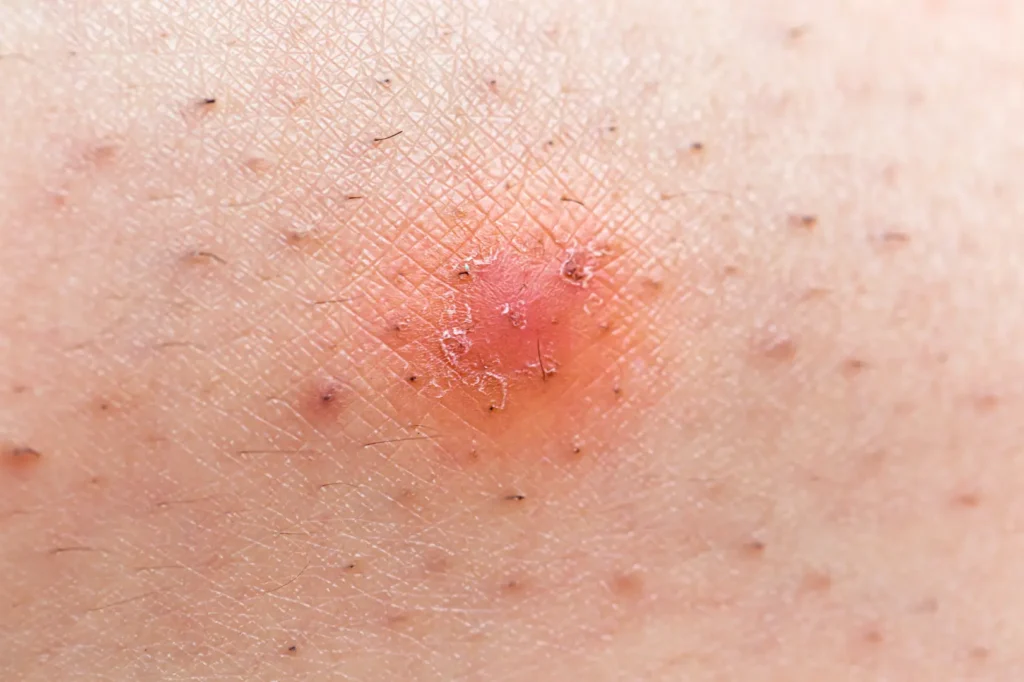
The closer the shave, the shorter and sharper the remaining hair tip becomes. When the cut hair sits at or just below skin level, it has a greater chance of penetrating the surrounding skin as it grows. Close shaving is a recognized trigger for pseudofolliculitis because the freshly cut hair can retract beneath the skin or curve back through the surface.
This is why getting the closest possible shave is not always the best goal for someone prone to bumps. Leaving a small amount of stubble can help. Shaving practices recommended for PFB include avoiding skin stretching, using short strokes, shaving with the direction of hair growth, and not repeatedly shaving the same area.
DermNet specifically recommends leaving roughly 1 mm of stubble rather than shaving flush to the skin. A razor bumps treatment plan may therefore begin with shaving a little less aggressively rather than reaching immediately for a medicated cream.
3. Shaving Against the Grain Can Increase the Problem
Going against the grain often feels smoother, but it may also create the perfect setup for another ingrown hair. When hair is cut against its natural growth direction, it may be pulled and cut more closely. This can leave the sharp tip in a position that makes re-entry into the skin easier. Recommended PFB shaving modifications include shaving in the direction of follicular growth rather than against it.
This can be particularly tricky along the jawline and neck because hair often grows in several directions there. If you deal with razor bumps on face or under the jaw, it can help to map your growth pattern instead of automatically moving the razor in one direction across the entire beard.
The goal is not necessarily to make shaving slower forever. It is to stop creating the same conditions that allow hairs to become trapped.
4. Shaving Technique Matters More Than People Realize
The way hair is prepared before shaving can influence how easily it is cut. Short, dry, coarse hairs are more rigid. Moisture can soften the hair, which is why dermatology guidance often recommends shaving after showering or after the hair has been thoroughly wet. For people prone to ingrown hairs, dermatologists recommend softening the hair before shaving and using shaving products that reduce friction.
Skin stretching is another issue. Pulling the skin tightly may allow the razor to cut the hair below the normal surface level. Once the skin relaxes, that hair can retract into the follicle and become more likely to penetrate the skin.
For patients trying to learn how to prevent ingrown hairs, these simple mechanical changes may matter as much as the product used afterward.
5. Razor Bumps Are Not the Same as Acne
They can look remarkably similar. Pseudofolliculitis often causes red, flesh-colored, or dark papules centered around hair follicles. Some bumps may become pustular, which can make them look like acne. However, the underlying process is different. PFB is an inflammatory reaction to hairs penetrating the skin, while acne vulgaris is a separate diagnosis.
That distinction matters because acne products do not automatically address the root cause of razor bumps. There is another look-alike worth knowing about: folliculitis barbae. This condition affects hair follicles and can produce tender or itchy pustules in recently shaved areas.
Unlike pseudofolliculitis, it is commonly associated with infection, particularly Staphylococcus aureus. Folliculitis barbae and pseudofolliculitis barbae can occur at the same time, which can make the bumps harder to distinguish without evaluation. So if every bump around your beard is being labeled “acne,” you may be treating the wrong problem.
6. Infection Can Complicate an Existing Ingrown Hair Problem
Inflamed follicles are easier to irritate further. Pseudofolliculitis itself is not primarily an infection. However, repeated shaving and inflammation can disrupt the follicle and make secondary infection more likely. Folliculitis barbae most commonly involves S. aureus colonization and may develop alongside pseudofolliculitis.
That can change what the bumps look and feel like. More pronounced tenderness, pustules, drainage, or deeper inflammation can suggest that something other than a simple ingrown hair is happening. Severe or persistent folliculitis can also lead to scarring and hair loss.
This is one reason professional evaluation becomes important when the bumps stop behaving like ordinary shaving irritation.
7. Picking Can Leave a Bigger Problem Behind
That trapped hair can be very hard to ignore. But repeatedly squeezing, scratching, or digging into the skin can create additional inflammation and tissue damage. Pseudofolliculitis already carries a risk of pigment changes and scarring, and manipulating the area can make those consequences more noticeable.
Recognized complications of PFB include post-inflammatory hyperpigmentation, abscesses, and hypertrophic or keloid scarring. This is particularly important when the bumps seem to disappear, but dark marks remain.
The mark you see weeks later may not be an active ingrown hair anymore. It may be pigment left behind by the earlier inflammatory process. Preventing the next round of bumps can therefore matter just as much as calming the current ones.
How Aerolase Fits the Conversation
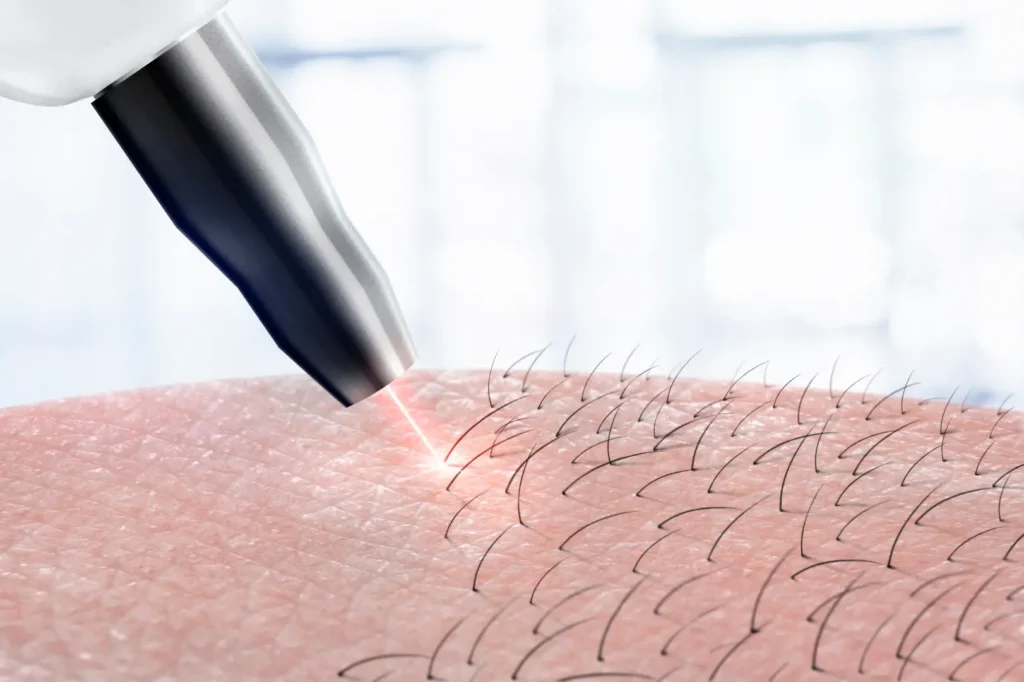
Fitzy Shades MedSpa uses Aerolase as one option for unwanted hair and ingrown-hair concerns. The Neo Elite platform is a 1064 nm Nd:YAG laser using 650-microsecond pulse technology, and Aerolase specifically lists pseudofolliculitis barbae among the conditions the platform is designed to treat.
That device-specific information lines up with the broader clinical evidence on 1064 nm Nd:YAG treatment for PFB, although it is important not to treat studies performed with one Nd:YAG platform as direct proof of identical outcomes with every device.
Aerolase may therefore be considered when reducing unwanted hair is an appropriate way to address repeated ingrown hairs. It should not be presented as an automatic treatment for every bump that happens after shaving.
If the bumps are actually caused by bacterial folliculitis, acne, dermatitis, or another condition, a different approach may be needed. That is why consultation matters before choosing the device.
Break the Shave-and-Bump Cycle
Recurring ingrown hairs are usually not random. The shape of the hair, the closeness and direction of shaving, repeated friction, inflammation, and the way the hair grows back can all contribute to pseudofolliculitis barbae.
Changing grooming habits is often the first step. When those changes are not enough, professional options may include topical treatment or laser hair reduction depending on the cause and severity.
For patients looking for ingrown hair treatment in Prosper, TX, Fitzy Shades MedSpa offers Aerolase as one option that can be considered when unwanted hair and recurring ingrown hairs are part of the problem.
The goal is not simply to calm the latest bump. It is to understand why it keeps happening and build a plan that makes the next one less likely.
Contact us today to book your consultation!